


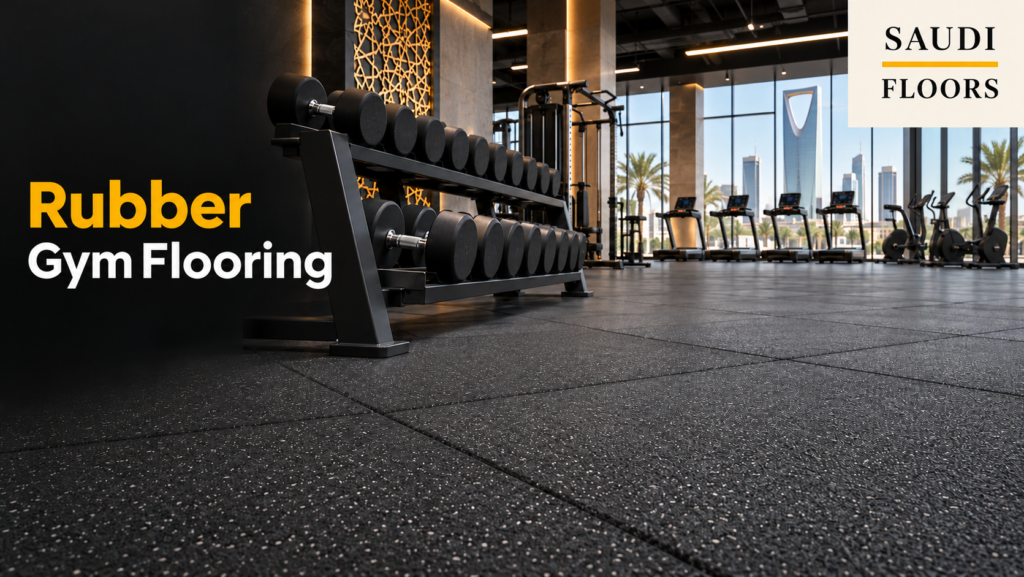
A lifting area may need a dedicated platform, while a cardio zone needs a stable surface beneath equipment and enough room for routine cleaning. Where the two areas meet, floor heights and doorway transitions also matter. That is why choosing rubber gym flooring starts with the equipment layout and training programme. Once those are clear, you can specify a surface for each zone and compare installation quotes on the same basis.
If you are opening or refurbishing a gym in Saudi Arabia, send Saudi Floors your gym layout to discuss flooring options and request a quote. Include each zone’s area, the existing floor and any restrictions on working hours or moving equipment.
Which Flooring Works for Each Gym Zone?
| Training zone | Option to compare | What to check |
|---|---|---|
| Free weights | Rubber tiles suited to the intended use | Equipment weight, repeated impacts and replacement options |
| Weightlifting | A dedicated platform or impact flooring system | Drop weight, drop height and impact transmission |
| Cardio | Rubber rolls or tiles compatible with equipment | Subfloor stability, concentrated equipment loads and cleaning |
| Functional and group training | Rubber flooring with a texture suited to movement | Exercise types, seam stability and maintenance |
| Walkways and transitions | Flooring compatible with adjacent finishes | Door clearance, secure edges and differences in height |
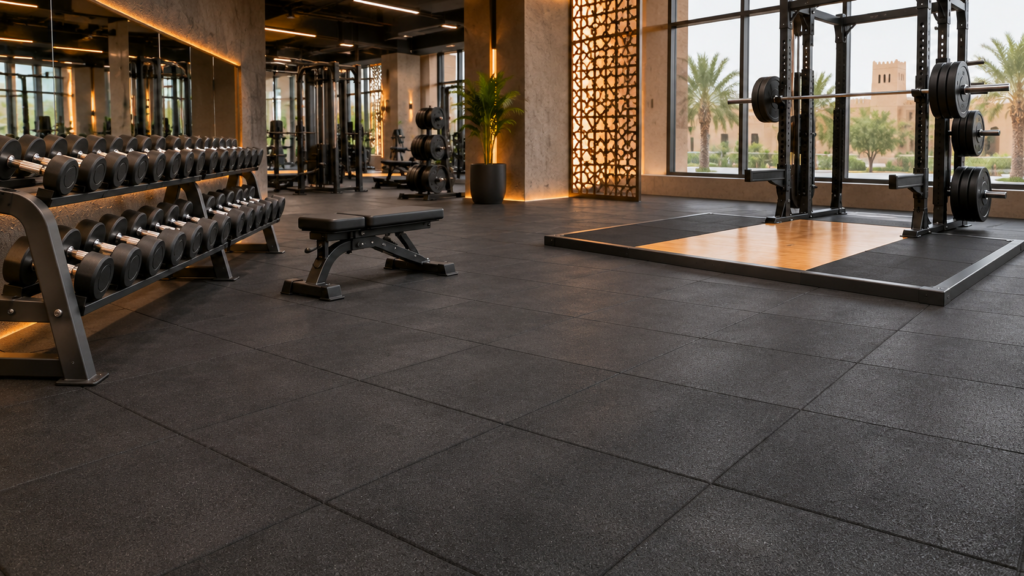
Free Weights and Lifting Platforms
Distinguish between an area where weights are lowered under control and one where barbells or dumbbells are dropped regularly. In the second case, specify the expected drop weight, height and frequency. Ask the supplier how the proposed system is intended to perform under those conditions. A dedicated platform may address the lifting area without upgrading the flooring across the entire gym.
For an upper-floor gym or a facility next to offices or apartments, discuss impact noise and vibration with the building manager or a specialist where needed. Rubber thickness alone does not tell you how much vibration will reach an adjoining space.
Cardio Equipment
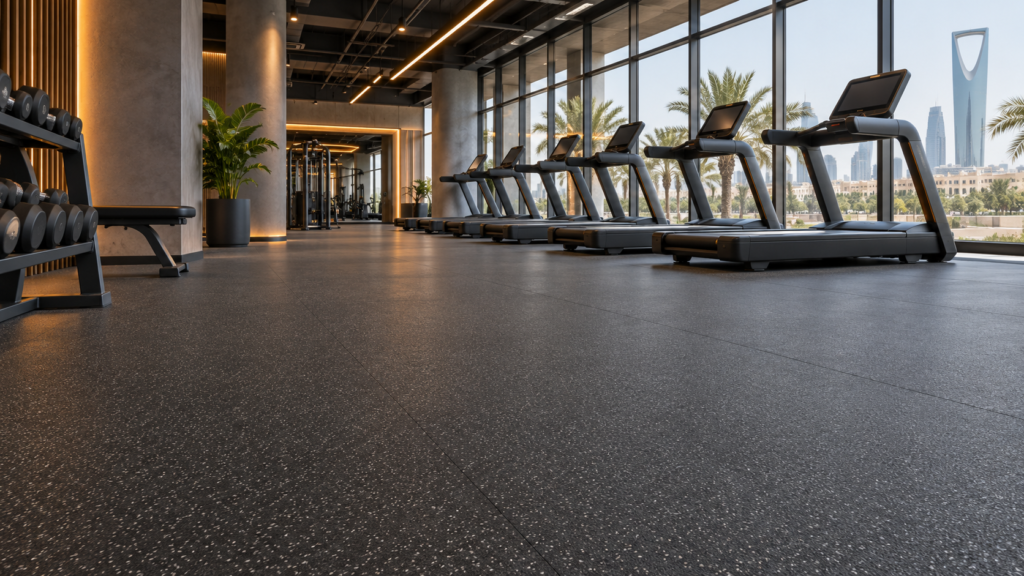
Check the equipment manufacturer’s installation requirements first. Treadmills and other machines need a stable base, and requirements may differ according to the equipment and where its feet bear on the floor. If you are considering rolls, plan the seam layout around the equipment rows and access routes for cleaning and maintenance.
In an operating gym, identify which machines can be moved easily and which require a technician to disconnect and reinstall them. This affects how the installation can be phased and when each zone can reopen.
Functional and Group Training
Review a sample with the intended activities in mind, especially if classes involve jumping, changing direction or moving training equipment. If one room hosts several kinds of classes, share the schedule and expected use with the supplier before settling on a finish.
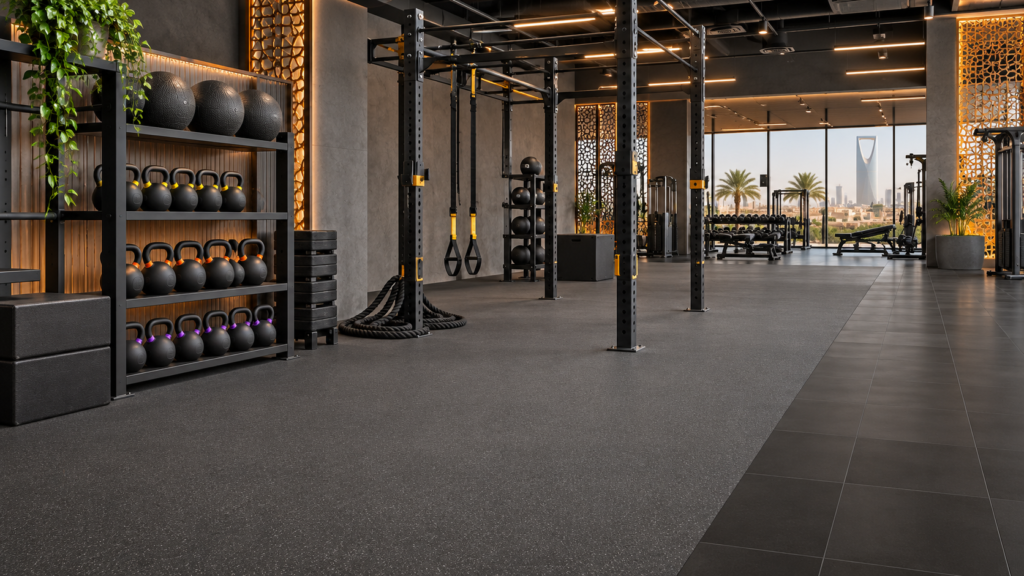
Check how the training area meets the adjacent walkway and weights zone. Colour and material changes can help identify zones, while properly detailed transitions account for differences in finished floor height.
Rubber Tiles vs. Rolls: How to Choose
Rubber tiles are worth considering when a layout calls for clearly defined zones or you want spare pieces for future maintenance. Depending on the fixing method, it may be possible to replace an individual damaged tile. Place two samples side by side to check edge fit, colour and joint appearance, and ask whether matching spare tiles are available.
Rubber rolls are worth comparing for open areas where fewer seams and a consistent appearance matter. Ask to see the proposed roll direction and cuts, especially in rooms with columns, alcoves or several doors. Review a sample seam so you know what to expect from the finished installation.
Tiles and rolls can be used in the same gym. Ask the installer to identify the boundary between systems, the finished floor heights and the transition detail. Explore Saudi Floors’ rubber flooring and playground solutions before narrowing the options for your project.
How Thick Should Rubber Gym Flooring Be?
Start with what happens in each zone. Share the equipment list and weights, identify where lifters may drop weights and indicate where equipment or benches move regularly. Ask for a written specification linking each product’s thickness, construction and fixing method to its intended use.
When two products have the same thickness, compare their construction, available performance data, installation instructions and subfloor requirements. If noise is a deciding factor, ask for information on the complete proposed system. The floor assembly and the building both influence the result.
Subfloor Preparation and Installation
Can Rubber Flooring Go Over Tile or Concrete?
Installation over an existing surface may be possible if the base is stable, level and suitable for the product. Loose tiles, uneven areas and moisture need assessment before the surface is covered. Ask the installer which areas can remain, what needs repair or levelling and how edges and thresholds will be finished.
If the gym combines rubber training floors with a different finish in reception or circulation areas, coordinate the finished heights before installation. Checking the transition on the layout can help avoid clashes with doors and equipment later.
What Should You Check at Handover?
Review seams, edges and transitions against the agreed specification. After equipment is returned, check that it sits and is installed as required by its manufacturer. Ask for written cleaning instructions and the conditions for reopening, particularly when adhesives or other installation materials require time before use.
If parts of the gym will remain open, discuss a phased installation plan with Saudi Floors. Set out alternative access routes, the closure window for each zone and who is responsible for moving equipment.
What Affects the Cost of Rubber Gym Flooring in Saudi Arabia?
Pricing depends on each zone’s area, material, thickness, cuts, existing floor condition and installation scope. A lower quote may exclude levelling, transition profiles or moving equipment, which can make two offers difficult to compare.
Ask for separate prices for materials, subfloor preparation, installation, transitions and lifting platforms. Check that the quote names the product, specifies how it will be installed and shows what each zone includes. That makes it easier to compare equivalent offers and decide which areas must be ready for opening and which can follow later.
Maintaining the Floor After Opening
Set a cleaning schedule that follows the product instructions and reflects how the gym operates. Record the location of any lifting seam or shifting tile and when it first appeared. This helps the maintenance team determine whether the issue is isolated or keeps returning in an area where the use has changed.
Before relocating a heavy machine or adding a lifting platform, check the equipment and flooring requirements. Keep a record of the product, colour and fixing method so replacement pieces and future repair work can be matched more easily.
Frequently Asked Questions
Are rubber tiles better than rubber rolls?
Tiles are worth comparing when individual replacement matters. Rolls may suit open areas where fewer seams are preferred. The choice depends on the activity and installation method.
Can every zone use the same thickness?
Yes, if the product is suitable for all intended uses. A zone where weights are dropped, however, may need a different system from one used for stationary machines.
Does rubber flooring eliminate weight-drop noise?
Impact noise and vibration depend on the complete floor assembly, building and training activity. Review available system data and discuss acoustic needs before choosing a product.
Can rubber flooring be installed over ceramic tiles?
It may be possible if the tiles are secure and the base is suitable. An assessment can identify repairs, levelling or other preparation needed before installation.
What flooring should I choose for a home gym?
Consider the exercises, equipment, space and room below. Check the product’s intended use, especially if the setup includes heavy weights or repeated impacts.
Can a gym stay open while the flooring is replaced?
Phased work may be possible if work areas can be isolated, equipment can be moved and circulation routes can remain accessible. Reopening depends on the installation system.
Can I use the same cleaner on all rubber floors?
Check the instructions for each product. If the gym uses several flooring systems, ask for a maintenance guide for each finish.
What should I provide for a quote?
Share the project city, floor plan, subfloor photos, equipment layout, lifting zones and target opening date.
Request a Gym Flooring Quote by Training Zone
Whether you are fitting out a new fitness centre or replacing an existing floor, mark the free weights, cardio and training areas on your plan. Contact Saudi Floors to discuss the specifications and request a project quote, or call the team to explain the site conditions and installation schedule.